You leave an appointment with a sheet of paper. It says something like "3 carb choices at breakfast, 3 to 4 at lunch". It is a helpful plan, but nobody had time to explain what a "carb choice" actually is.
This article explains the idea in plain words, so the plan your care team gave you makes sense at the table.
Carbohydrate is the part of food that raises blood glucose most
Your body turns the carbohydrate in food into glucose. NIDDK, part of the US National Institutes of Health, puts it simply: carbs from food "can raise your blood glucose level". An American Diabetes Association report on nutrition therapy calls carbohydrate "the primary macronutrient of concern" for managing blood glucose, because it has a direct effect on glucose after a meal.
That is why so many diabetes meal plans are built around carbohydrate. It is not about cutting carbs out. It is about knowing roughly how much is on the plate.
What one carb choice means
A carb choice is a portion of food that holds a set amount of carbohydrate. In most diabetes education that amount is about 15 grams. Some care teams and some countries use 10 grams instead. A 2024 review by Amorim and colleagues notes that, depending on the patient's situation and the guidelines a team follows, "each serving equals 10 g or 15 g" of carbohydrate.
The point of the unit is that you can swap foods without adding up grams every time. The same review gives an example: a meal with 45 g of carbohydrate can be made from three servings of different foods. With 15 g choices, that is three carb choices.
On DiabeticIndex, every food page shows "carb choices" next to the grams, counted at 15 g each and rounded to the nearest half. If your team uses 10 g, the grams are the number to follow.
A serving on a label is not always one carb choice
This is where people often get caught out. A "serving" of a food, or the portion you normally eat, may hold one carb choice, two, or less than one.
Here are a few everyday foods, each shown at a household measure from USDA FoodData Central:
-
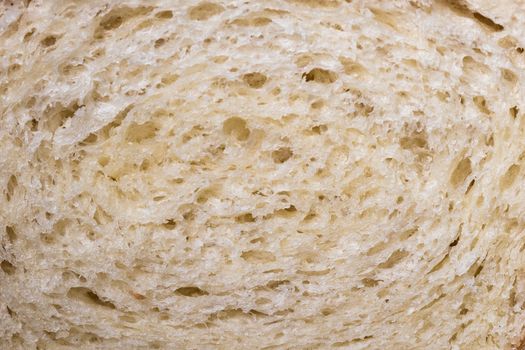 13 g carbs
0.6 g fiber
Bread, white, commercially prepared
Per 1 slice
13 g carbs
0.6 g fiber
Bread, white, commercially prepared
Per 1 slice
- No photo yet 27 g carbs 3.1 g fiber Bananas, raw Per 1 medium (7" to 7-7/8" long)
-
 44 g carbs
0.6 g fiber
Rice, white, cooked, no added fat
Per 1 cup, cooked
44 g carbs
0.6 g fiber
Rice, white, cooked, no added fat
Per 1 cup, cooked
-
 60 g carbs
6.3 g fiber
Potato, baked, peel eaten
Per 1 medium
60 g carbs
6.3 g fiber
Potato, baked, peel eaten
Per 1 medium
Look at the carbs on each card and you will see they are not all the same size of carb choice. A slice of bread is close to one. A cup of cooked rice or a medium baked potato is several. On each food page you can change the amount, in grams, ounces or the food's own measures, and the carb choices change with it.
Grams or choices: two ways of counting the same thing
Counting in choices and counting in grams describe the same carbohydrate. Choices are simpler to learn. Grams are more exact.
The American Diabetes Association's Standards of Care list several ways to plan meals, including "the plate method, carbohydrate choice, carbohydrate counting, and highly individualized behavioral approaches". It describes counting carbohydrate in grams as "a more advanced skill". There is no single right method. The one that works is the one you can keep doing.
Not everyone needs to count carbs
NIDDK is clear that "not all people with diabetes need to count carbs". Its plate method, half the plate non-starchy vegetables, a quarter protein and a quarter carbohydrate foods, helps with portions "without counting and measuring".
Counting matters most for people who take insulin:
- Insulin with meals. NIDDK notes that "if you take insulin, counting carbs can help you know how much insulin to take". The ADA recommends education on how carbohydrate affects glucose, tailored to each person's insulin plan.
- Fixed insulin doses. For people on the same insulin doses each day, the ADA recommends keeping carbohydrate intake consistent "with respect to time and amount". That may be where a set number of carb choices per meal comes from.
Your diabetes team will tell you which approach fits your medicines. If you are not sure whether counting is right for you, that is a good question for your next appointment.
Estimating is hard, and that is normal
Even people who have counted carbs for years get it wrong. In the studies Amorim and colleagues reviewed, adults with type 1 diabetes made errors of around 20% per meal, and underestimating was more common than overestimating.
A few things help:
- Weigh or measure your usual bowl or plate once. It shows what your usual serving of rice or pasta really holds.
- On a packaged food, read the serving size first, then the total carbohydrate for that serving.
- Use the food pages here at the amount you really eat, not the amount on the label.
There is no single right number
The ADA states: "There is no ideal percentage of calories from carbohydrate, protein, or fat for people with diabetes." The right amount depends on your medicines, your weight, how active you are and your glucose goals. That is why your plan says three choices and someone else's says four.
The kind of carbohydrate matters as well as the amount. The ADA recommends emphasising "minimally processed, nutrient-dense, high-fiber sources of carbohydrate", with at least 14 g of fiber per 1,000 calories. Each food page here shows fiber under the carbs, so you can compare foods.
If you want to see how your day adds up, the Today page totals the carbohydrate in what you log. You can enter the daily target your care team gave you, if you have one.
Your numbers are yours
Your doctor, diabetes educator or dietitian sets your carbohydrate targets and the way of counting that suits you. Their advice comes before anything you read here. If something on your meal plan is unclear, ask them to walk you through it with foods you actually eat.
For a closer look at one food that many people eat every day, see our article on rice and diabetes.
Sources
- American Diabetes Association Professional Practice Committee. 5. Facilitating Positive Health Behaviors and Well-being to Improve Health Outcomes: Standards of Care in Diabetes—2026. Diabetes Care, 2026; 49(Suppl 1): S89–S131 (recommendations 5.13, 5.24, 5.27, 5.28 and "Meal Planning"). pmc.ncbi.nlm.nih.gov/articles/PMC12690188 (checked 8 October 2026)
- Evert AB, Boucher JL, Cypress M, et al. Nutrition Therapy Recommendations for the Management of Adults With Diabetes. Diabetes Care, 2013; 36(11): 3821–3842. pmc.ncbi.nlm.nih.gov/articles/PMC3816916 (checked 8 October 2026)
- Amorim D, Miranda F, Santos A, et al. Assessing Carbohydrate Counting Accuracy: Current Limitations and Future Directions. Nutrients, 2024; 16(14): 2183. pmc.ncbi.nlm.nih.gov/articles/PMC11279647 (checked 8 October 2026)
- NIDDK. Healthy Living with Diabetes (last reviewed October 2023). niddk.nih.gov (checked 8 October 2026)
- USDA FoodData Central: Bread, white, commercially prepared (Foundation 325871); Bananas, raw (SR Legacy 173944); Rice, white, cooked, no added fat (FNDDS 2708408); Potato, baked, peel eaten (FNDDS 2709524). fdc.nal.usda.gov (checked 8 October 2026)
- Food figures on this page: USDA FoodData Central, via the DiabeticIndex food database.
This article is general information, not medical advice. Talk to your diabetes care team before changing how you eat or how you take your medicines.