You are in the grocery store, holding a box of cereal or a bottle of tea, and you want to know one thing: how much carbohydrate is in it? The answer is on the back, in the Nutrition Facts panel. But the panel is crowded, and the number you want is easy to misread.
This article goes through the parts of the label that matter most for carbohydrate, in the order that tends to avoid mistakes. It describes the US label in general terms; the exact layout can differ a little from product to product.
Start with the serving size
Every number on the panel is for one serving. NIDDK explains the difference between a serving and a portion: a serving "is the amount of food listed on a product's Nutrition Facts label", while a portion "is how much food you choose to eat at one time".
The two are often not the same. NIDDK's example is a frozen lasagna whose label lists a serving as one cup, in a box that holds four. Eat two cups and you have had two servings, and twice the carbohydrate printed on the label.
Two lines at the top help:
- Servings per container tells you how many servings the package holds. NIDDK notes it sits just above the serving size.
- Serving size is given in a household measure, such as cups, slices or pieces, and in grams.
The serving size is not advice. In NIDDK's words, it "is not a recommendation of how much you should eat or drink". It is closer to the amount people typically eat: the FDA changed some serving sizes so labels "more closely match how much we typically eat and drink". A serving of yogurt, for example, went from 8 ounces to 6.
Some packages that one person might finish in one sitting now show two columns, one for a serving and one for the whole package. Malik and colleagues, writing about the 2016 label update, give pints of ice cream and bags of chips as examples of packages that used to list several servings although one person often ate the whole thing.
Then total carbohydrate
Total carbohydrate is the line most carb counting starts from. It covers all the carbohydrate in a serving: starches, sugars and fiber together.
The carbohydrate you eat is that figure times the number of servings you actually eat. If your care team counts in carb choices, our article What is a carb choice? explains how grams turn into choices.
Some packages print "net carbs" on the front. That is not a line on the Nutrition Facts panel, which shows total carbohydrate. If your care team counts a different way, their method is the one that applies to you.
Dietary fiber
Dietary fiber is listed under total carbohydrate and is part of it. Slavin and Carlson describe dietary fibers as "nondigestible forms of carbohydrates", and note that the label's dietary fiber figure is in fact total fiber.
That total can include fiber added during manufacturing, such as inulin. Malik and colleagues note "there is little evidence" that these purified fibers have the same benefits as fiber in whole foods. Our article on fiber and diabetes goes into this.
Total sugars and added sugars
Total sugars are also part of total carbohydrate. They include sugar that is naturally in a food: Slavin and Carlson point out that "sugars are intrinsic in fruits and milk products". So plain milk and plain yogurt show sugars even with nothing added.
Since the 2016 update, the label also has a line for added sugars, the sugar put in during making. Malik and colleagues describe its Daily Value as "10 percent of calories", about 50 g on a 2,000-calorie day. NIDDK points to the same 10% figure from the Dietary Guidelines for Americans.
The American Diabetes Association's 2026 Standards of Care recommend that people with diabetes "minimize foods with added sugar". The added sugars line is where that shows on a package.
Here is the same kind of food with and without added flavoring, each at one cooked cup as USDA FoodData Central measures it:
-
 32 g carbs
4.6 g fiber
Oatmeal, instant, plain, made with water, no added fat
Per 1 cup, cooked
32 g carbs
4.6 g fiber
Oatmeal, instant, plain, made with water, no added fat
Per 1 cup, cooked
-
48 g carbs
4.6 g fiber
Oatmeal, instant, fruit flavored, no added fat
Per 1 cup, cooked
The flavored oatmeal shows more carbohydrate. Open each food page and you will see the difference sits mostly in the sugars line. On a packet, the added sugars line would tell you how much of that was added.
A high-fiber food, for comparison
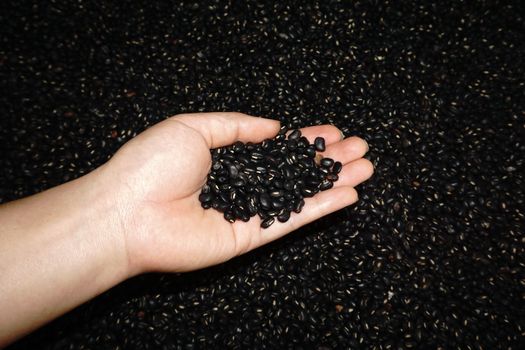
Canned black beans carry a fair amount of carbohydrate per cup, and a large part of it is fiber. Open the page to see the fiber line. A label works the same way: fiber and sugars sit inside total carbohydrate, not on top of it.
Label reading takes practice
If labels feel hard, you are not alone. In a study of about 1,800 young US adults, Christoph and colleagues found that only about a third used Nutrition Facts labels often. Those who did looked most at sugars, calories, serving size and the ingredient list.
Counting from a label is also a skill that takes time. A 2024 review by Amorim and colleagues stresses that people who count carbs need to understand the carbohydrate figures on packaged foods, and describes studies where some people with diabetes could not work out the carbohydrate from a label. A diabetes educator can go through labels with you, using the foods you buy.
If you take insulin, the carbohydrate you count can decide your dose, and a misread serving size can lead to too much or too little insulin. Ask your diabetes team how to handle foods where you are unsure.
Foods without a label
Fresh fruit, vegetables, bulk rice and restaurant meals usually come without a panel. The food pages here show USDA FoodData Central figures at household measures, and you can set the amount you eat. The Today page adds up what you log. For a closer look at common staples, see rice, bread and yogurt.
Your numbers are yours
The label tells you what is in a serving. How much of it fits your day depends on your medicines, your glucose goals and your body. Your doctor, diabetes educator or dietitian sets those numbers, and their advice comes before anything you read here. Bringing a few labels from your own kitchen to an appointment is a good way to practise together.
Sources
- NIDDK. Food Portions: Choosing Just Enough for You (last reviewed July 2021). niddk.nih.gov (checked 8 October 2026)
- Malik VS, Willett WC, Hu FB. The Revised Nutrition Facts Label: A Step Forward and More Room for Improvement. JAMA, 2016; 316(6): 583–584. pmc.ncbi.nlm.nih.gov/articles/PMC5287493 (checked 8 October 2026)
- Slavin J, Carlson J. Carbohydrates. Advances in Nutrition, 2014; 5(6): 760–761. pubmed.ncbi.nlm.nih.gov/25398736 (checked 8 October 2026)
- Christoph MJ, Larson N, Laska MN, et al. Nutrition Facts Panels: Who Uses Them, What Do They Use, and How Does Use Relate to Dietary Intake? Journal of the Academy of Nutrition and Dietetics, 2018; 118(2): 217–228. pubmed.ncbi.nlm.nih.gov/29389508 (checked 8 October 2026)
- Amorim D, Miranda F, Santos A, et al. Assessing Carbohydrate Counting Accuracy: Current Limitations and Future Directions. Nutrients, 2024; 16(14): 2183. pmc.ncbi.nlm.nih.gov/articles/PMC11279647 (checked 8 October 2026)
- American Diabetes Association Professional Practice Committee. 5. Facilitating Positive Health Behaviors and Well-being to Improve Health Outcomes: Standards of Care in Diabetes—2026. Diabetes Care, 2026; 49(Suppl 1): S89–S131 (recommendation 5.25). pmc.ncbi.nlm.nih.gov/articles/PMC12690188 (checked 8 October 2026)
- USDA FoodData Central: Oatmeal, instant, plain, made with water, no added fat (FNDDS 2708387); Oatmeal, instant, fruit flavored, no added fat (FNDDS 2708395); Black beans, from canned, no added fat (FNDDS 2707363). fdc.nal.usda.gov (checked 8 October 2026)
- Food figures on this page: USDA FoodData Central, via the DiabeticIndex food database.
This article is general information, not medical advice. Talk to your diabetes care team before changing how you eat or how you take your medicines.