At almost every diabetes appointment, someone mentions fiber. It is on the handouts, on cereal boxes and in the leaflets in the waiting room. But it is rarely explained what fiber is, how much people mean, or why it matters for blood glucose.
This article goes through what fiber is, what the guidelines and research say, and how to see the fiber in the foods you already eat.
Fiber is part of carbohydrate
Fiber is a kind of carbohydrate that the body does not digest. In a short review, Slavin and Carlson describe dietary fibers as "nondigestible forms of carbohydrates". Carbohydrate in food comes in three broad groups: sugars, starches and fibers.
That has a practical side. The carbohydrate figure on each food card and food page here is total carbohydrate, and the fiber is already inside it. Fiber and sugars are shown on each food page as separate lines under the carbs, so you can see how much of the total each one makes up.
Some fiber, called soluble fiber, forms a gel in the gut. A clinical review by Daley and Vadakekut explains that this gel slows the emptying of the stomach and delays the absorption of glucose, which can soften the rise in blood glucose after a meal. Oats, beans, lentils and many fruits carry soluble fiber.
What the ADA recommends
The American Diabetes Association's Standards of Care for 2026 include fiber in a formal recommendation (5.24): "Emphasize minimally processed, nutrient-dense, high-fiber sources of carbohydrate (at least 14 g fiber per 1,000 kcal)."
The same section adds that at least half of grain foods be "whole, intact grains", and that foods with at least 3 g of fiber per serving "are generally considered higher fiber choices". It notes that regular intake of enough fiber "is associated with lower all-cause mortality in people with diabetes".
Daley and Vadakekut report that American adults averaged about 17 g of fiber a day in 2017–2020, roughly half of the recommended amount.
What the research found
The evidence on fiber and blood glucose has grown over the past decade, and the size of the effect is still debated.
- An older view. A 2013 ADA report on nutrition therapy, by Evert and colleagues, found "little evidence that fiber significantly improves glycemic control" in the reviews available then. It noted benefits on glucose and A1C mainly in studies with very high fiber intakes, more than 50 g a day, which the authors thought few people could keep up.
- A newer review. Reynolds and colleagues (2020) pooled 42 trials in adults with prediabetes or diabetes, and two large cohort studies. In the trials, eating more fiber lowered A1C, fasting glucose, cholesterol and body weight a little, compared with lower-fiber diets. In the cohorts, people eating about 35 g of fiber a day had fewer early deaths than those eating about 19 g.
The 2020 review has limits its authors point out. The trials varied a great deal, there were few trials lasting a year or more, and there were no cohort data from outside Europe. So fiber looks helpful, but how much it changes glucose for any one person is not settled.
Where fiber shows up in everyday foods
Here are a few foods at a household measure from USDA FoodData Central. The cards show carbohydrate; tap a card to see its fiber line.
-
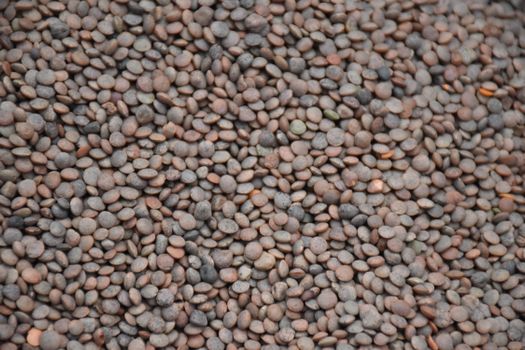 36 g carbs
14 g fiber
Lentils, from dried, no added fat
Per 1 cup
36 g carbs
14 g fiber
Lentils, from dried, no added fat
Per 1 cup
- No photo yet 15 g carbs 8.0 g fiber Raspberries, raw Per 1 cup
Open their pages and compare the fiber line with the carbohydrate above it. In both, fiber makes up a large share of the carbohydrate, and in raspberries it is more than half.
-
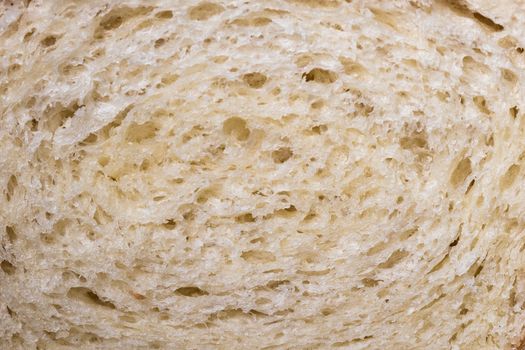 14 g carbs
0.6 g fiber
Bread, white
Per 1 medium or regular slice
14 g carbs
0.6 g fiber
Bread, white
Per 1 medium or regular slice
-
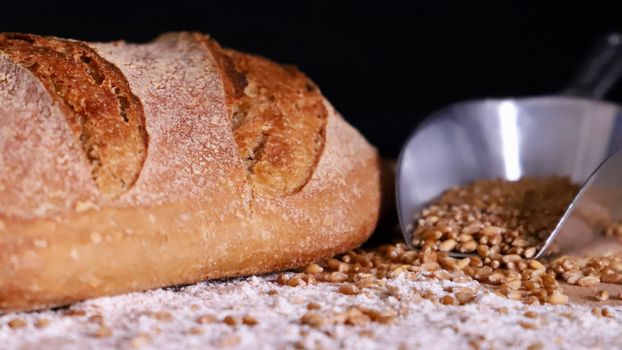 16 g carbs
2.2 g fiber
Bread, whole wheat
Per 1 medium or regular slice
16 g carbs
2.2 g fiber
Bread, whole wheat
Per 1 medium or regular slice
A slice of whole wheat bread has several times the fiber of a slice of white bread. Its carbohydrate is not lower, though: the whole wheat slice in this record is heavier and shows a little more. Fiber and carbohydrate are two separate questions.
- No photo yet 30 g carbs 4.2 g fiber Apple, raw Per 1 medium
- No photo yet 28 g carbs 0.5 g fiber Apple juice, canned or bottled, unsweetened, without added ascorbic acid Per 1 cup
A medium apple and a cup of apple juice show similar carbohydrate. The apple has many times the fiber, because juicing leaves most of it behind. Our article on fruit juice and diabetes looks at this more closely.
Fiber added to packaged foods
Some packaged foods have fiber added, such as inulin, psyllium or cellulose. It is counted on the Nutrition Facts label under dietary fiber like any other. Malik and colleagues, writing about the US label in 2016, note that "there is little evidence" these purified fibers have the same benefits as the fiber in whole foods. Daley and Vadakekut point out that some added fibers have shown benefits in research, and that the effects differ from one fiber to another. Our article on reading nutrition labels for carbs covers the label.
When more fiber is not the right step
More fiber does not suit everyone, and how fast matters too.
- Going slowly. NIDDK suggests adding fiber "a little at a time so your body gets used to the change", and drinking plenty of liquids "to help the fiber work better". A sudden jump can bring gas and bloating.
- Gastroparesis. NIDDK names diabetes as "the most common known underlying cause" of gastroparesis, a condition where the stomach empties too slowly. For people with it, NIDDK says a doctor may recommend foods that are low in fiber. If you have been told you have gastroparesis, talk to your doctor before adding fiber.
- Medicines. If you take insulin or a medicine that can cause low blood glucose, changing what is on your plate can change how much medicine you need. Tell your diabetes team about a big change.
- Kidney disease. If you also have kidney disease, your kidney care team may give different advice about high-fiber foods such as beans and fruit.
The Today page adds up the carbohydrate, fiber and sugars in what you log, so you can see where your fiber comes from. For specific foods, see beans and lentils, oatmeal, bread and rice.
Your numbers are yours
The right amount of fiber, and the right pace for adding it, depend on your health, your digestion and your other conditions. Your doctor, diabetes educator or dietitian sets those numbers, and their advice comes before anything you read here. If you want to eat more fiber, ask them which foods fit the way you already eat.
Sources
- American Diabetes Association Professional Practice Committee. 5. Facilitating Positive Health Behaviors and Well-being to Improve Health Outcomes: Standards of Care in Diabetes—2026. Diabetes Care, 2026; 49(Suppl 1): S89–S131 (recommendation 5.24, "Carbohydrates" and Table 5.2). pmc.ncbi.nlm.nih.gov/articles/PMC12690188 (checked 8 October 2026)
- Reynolds AN, Akerman AP, Mann J. Dietary fibre and whole grains in diabetes management: Systematic review and meta-analyses. PLoS Medicine, 2020; 17(3): e1003053. pubmed.ncbi.nlm.nih.gov/32142510 (checked 8 October 2026)
- Evert AB, Boucher JL, Cypress M, et al. Nutrition Therapy Recommendations for the Management of Adults With Diabetes. Diabetes Care, 2013; 36(11): 3821–3842. pmc.ncbi.nlm.nih.gov/articles/PMC3816916 (checked 8 October 2026)
- Daley SF, Vadakekut ES. The Role of Dietary Fiber in Health Promotion and Disease Prevention: A Practical Guide for Clinicians. In: StatPearls. StatPearls Publishing, 2026. pubmed.ncbi.nlm.nih.gov/32644459 (checked 8 October 2026)
- Slavin J, Carlson J. Carbohydrates. Advances in Nutrition, 2014; 5(6): 760–761. pubmed.ncbi.nlm.nih.gov/25398736 (checked 8 October 2026)
- Malik VS, Willett WC, Hu FB. The Revised Nutrition Facts Label: A Step Forward and More Room for Improvement. JAMA, 2016; 316(6): 583–584. pmc.ncbi.nlm.nih.gov/articles/PMC5287493 (checked 8 October 2026)
- NIDDK. Eating, Diet, & Nutrition for Constipation (last reviewed May 2018). niddk.nih.gov (checked 8 October 2026)
- NIDDK. Symptoms & Causes of Gastroparesis, and Eating, Diet, & Nutrition for Gastroparesis (last reviewed January 2018). niddk.nih.gov (checked 8 October 2026)
- USDA FoodData Central: Lentils, from dried, no added fat (FNDDS 2707425); Raspberries, raw (SR Legacy 167755); Bread, white (FNDDS 2707598); Bread, whole wheat (FNDDS 2707709); Apple, raw (FNDDS 2709215); Apple juice, canned or bottled, unsweetened, without added ascorbic acid (SR Legacy 173933). fdc.nal.usda.gov (checked 8 October 2026)
- Food figures on this page: USDA FoodData Central, via the DiabeticIndex food database.
This article is general information, not medical advice. Talk to your diabetes care team before changing how you eat or how you take your medicines.